Thursday, April 29, 2010

magari

In each language there are words that escape a clear univocal definition and a precise use. This is the case in Italian of “magari”.
To look for help, we turned to the good old dictionary Devoto-Oli

MAGARI (ma-gà-ri)

It expresses:
a strong desire, felt as unrealizable “magari potessi andare!”[I wish I could go!]
an enthusiastic adhesion/acceptance: “vorresti venire con noi?” “Magari” [Would you like to come with us? Absolutely!]
a moderate assent “prendiamo un aperitivo?” “Magari” [shall we have an aperitif? alright]

2. It functions as adverb in parenthetical position as perfino, addirittura : “loro, magari, ti diranno che non lo sanno” [they will even say to you that they don’t know it]

The word magari comes from the Greek “makárie” vocative of “makários” meaning happy.

Thursday, April 22, 2010

...alea iacta est!

In 49 B.C., on the shores of the river Rubicone (Romagna), which marked the border between Italy and Gallia Cisalpine, Julius Cesar stated the famous sentence: “Alea iacta est”, that is: “the dice is cast”. Crossing the Rubicone meant to violate the law that prohibited armed men to enter the Italian soil, hence Cesar’s action marked the beginning of the civil war, which brought the end of the Roman Republic and the beginning of Cesar’s dictatorship.
The sentence still refers to actions that cannot be undone.

Tuesday, April 13, 2010

loan-words

Italian words, that do not come directly from Latin mostly, come from the languages of the populations Italians came in contact directly or indirectly throughout the centuries.
These words are called loan-words or precisely:
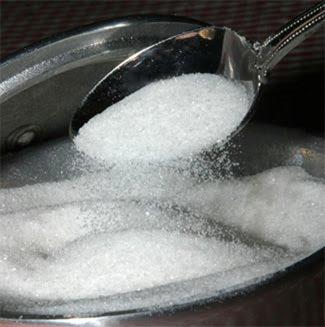
-integrated loan-words are words that have phonetically adapted into Italian, that is they have taken an Italian spelling and pronunciation, thus they have acquired also gender (masculine and feminine) and number (singular and plural). These words are for instance "giardino" (from franco-provencal jardin), "bistecca" (from English beefsteak) and "zucchero" (from arabian súkkar);
-non-integrated loan-words are words entered only recently in the Italian languages, thus they have maintained their original form (spelling, and sometimes also pronunciation). They are always masculine and invariable (do not change from singular to plural). These words are for instance "dessert" (from French dessert), "golpe" (from Spanish golpe), "sport" (from English sport), "würstel" (from German würstel) and "robot" (from Czech robot).

Friday, April 2, 2010


Buona Pasqua a tutto il mondo!

Thursday, April 1, 2010

Grammar and coffee

For Italians, only a cup of coffee really starts their day. At home or in the Italian bars, millions of Italians stop briefly to enjoy the aroma before sipping slowly their coffee. Only then, the day really begins.
Complete with the direct or indirect object pronouns this brief story about coffee, from “Grammatica pratica della lingua italiana” by Susanna Nocchi (Alma Edizioni-Firenze).
As usual, if you need help, please contact us!

Il caffè di Piero
Che bellezza! Il mio primo caffè della giornata! Ho preso la moka,______ ho riempita di acqua, ho messo il filtro e poi ho aggiunto il mio caffè preferito: Arabica.
______ piace questa miscela, ______ bevo ogni giorno.
E’ l’unica che ______ tiene sveglio e ______ fa affrontare bene la giornata.La mia ragazza invece è salutista, dice che il caffè non ______fa bene, che ______ rende nervosa e beve solo tè deteinato.
Sì! Avete capito bene: tè deteinato, un’offesa all’italianità!
Volete mettere con il piacere di preparare la moka, sentir______ mentre fa il caffè e sentire il profumo del caffè che riempie la stanza… poi versar______ nella tazzina, senza zucchero naturalmente. E, finalmente, ber______ mentre ti svegli lentamente… questo sì che è un piacere della vita.

Friday, March 26, 2010

La Fenice reborn from its ashes

It was 29 January 1996, when the Teatro La Fenice in Venezia was completely destroyed in an arson started by an electrician working at the renovation.
All the major national institutions worked to guarantee the re-construction of the beautiful theatre, and after 8 years the theatre was finally re-built. On 14 December 2003, the new Fenice was inaugurated before the then President of the Republic Carlo Azeglio Ciampi, with a concert directed by Riccardo Muti. Since 1st January 2004, to celebrate the re-edification of the theatre, every New Year’s Day the Concerto di Capodanno takes place to enhance with opera pieces the famous symphonic concert at the Musikverein in Vienna. If you are in Venice stop by Campo San Fantin (San Marco), and enjoy a tour of the Fenice and maybe even a show !

Friday, March 19, 2010

Italy’s three capitals

The unification of Italy followed the events of the years 1860 and 1861.
At the first convocation of the Italian Parliament (in February 1861), Vittorio Emanuele II was proclaimed king of Italy.
In 1866, after the Third Independence War, Veneto and part of Lombardy were taken from the Austrian-Hungarian Empire and incorporated into the Italian kingdom.
In 1870, with the defeat of Rome, Lazio was subtracted from the Church State and included in the Italian Kingdom.
Roma became the official capital of Italy, after Torino, which was the capital city from 1861 to 1865, and Firenze, capital from 1865 to 1870.